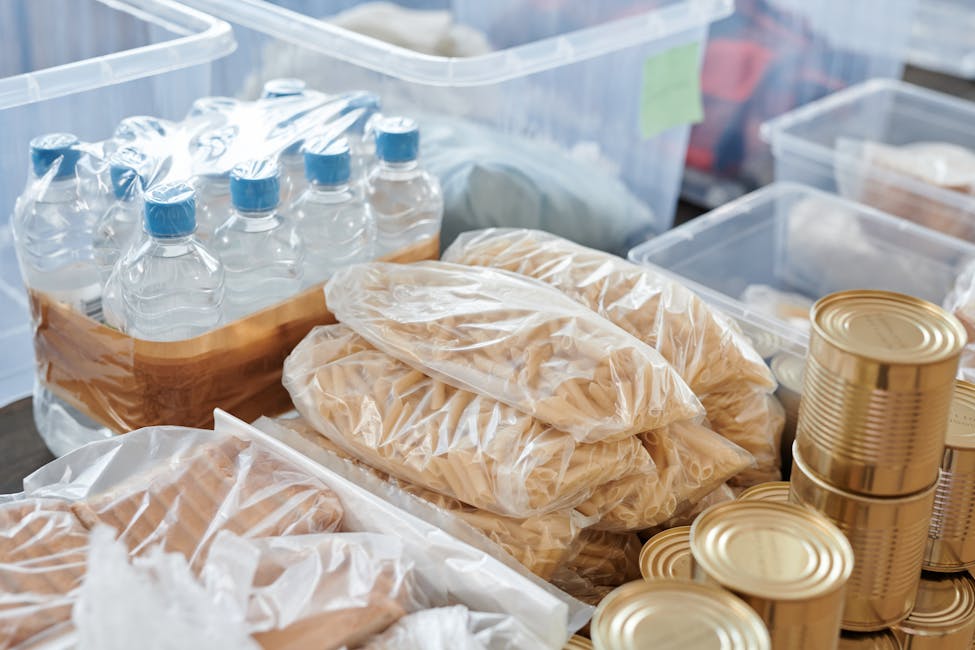
The answer is simpler than most people expect: multiply your daily calorie need by the number of days you want covered, then match that to real food quantities. This guide gives you the exact math, a ready-to-use planning worksheet, and practical storage amounts for families of every size.
FEMA recommends 72 hours minimum. Most emergency planners suggest 2 weeks. Serious preparedness-minded households aim for 3 months. You don't have to do all of it at once — start with 72 hours, then build from there.
What Is Your Calorie Baseline for Emergency Planning?
Calories are the foundation of any food storage plan. Everything else - weight, volume, variety - flows from your calorie target. Use these benchmarks:
| Person | Sedentary | Moderate | Active |
|---|---|---|---|
| Child (2-3) | 1,000 | 1,200 | 1,400 |
| Child (4-8) | 1,400 | 1,600 | 1,800 |
| Child (9-13) | 1,600 | 1,800 | 2,200 |
| Teen (14-18) | 1,800 | 2,200 | 2,600 |
| Adult (19-50) | 2,000 | 2,200 | 2,800 |
| Adult (51+) | 1,800 | 2,000 | 2,400 |
Emergency planning tip: Use the “Moderate” column as your baseline. Emergencies involve stress, which increases caloric needs — but extended emergencies often involve reduced physical activity. Moderate splits the difference. The CDC's emergency preparedness guidance also notes that caloric needs can rise significantly during high-stress or physically demanding emergency scenarios.
How Do You Calculate Your Household Daily Total?
Add up every household member's calorie target. Here's an example for a family of four (2 adults, 2 kids aged 8 and 12):
- Adult 1 (active): 2,200 cal/day
- Adult 2 (moderate): 2,000 cal/day
- Child age 8 (moderate): 1,600 cal/day
- Child age 12 (moderate): 1,800 cal/day
- Total household: 7,600 cal/day
Step 3: Match to Your Target Duration
| Duration | Formula | Family of 4 (7,600 cal/day) |
|---|---|---|
| 72 hours | Daily total × 3 | 22,800 calories |
| 2 weeks | Daily total × 14 | 106,400 calories |
| 1 month | Daily total × 30 | 228,000 calories |
| 3 months | Daily total × 90 | 684,000 calories |
Step 4: Convert Calories to Real Food Quantities
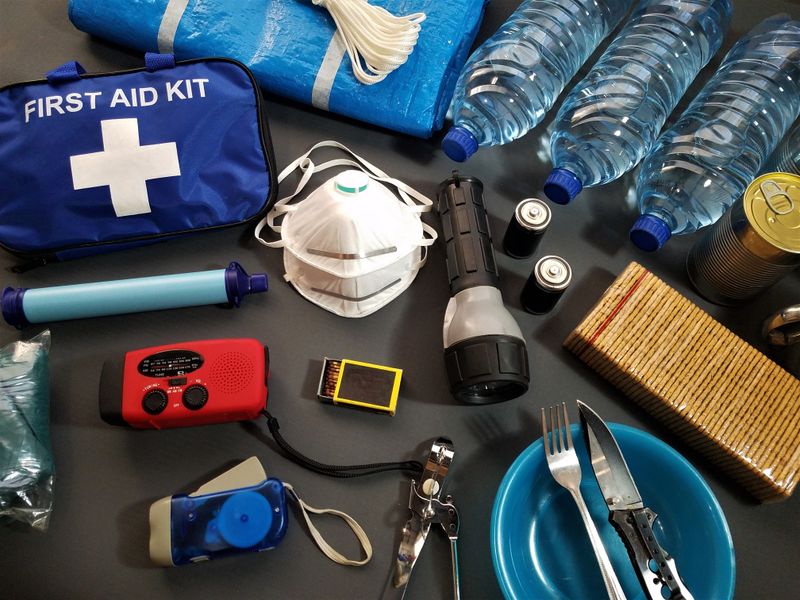
Calorie math is only useful if you can translate it to grocery store or food storage quantities. Here are calorie densities for common emergency foods:
| Food | Cal/lb | Cal/can (15oz) | Shelf Life |
|---|---|---|---|
| White rice (dry) | 1,650 | - | 25-30 years |
| Pinto beans (dry) | 1,570 | - | 25-30 years |
| Rolled oats (dry) | 1,700 | - | 5-8 years |
| Canned beans | - | 350 | 3-5 years |
| Canned tuna | - | 150 | 3-5 years |
| Peanut butter | 2,650 | - | 1-2 years |
| Freeze-dried meals | ~1,200 | - | 25-30 years |
Step 5: The Planning Worksheet
Use this worksheet to plan your storage build. Fill in your household numbers to get your targets:
| Item | Per Person/Day | 72 Hours (1 person) | 2 Weeks (1 person) |
|---|---|---|---|
| Water | 1 gallon | 3 gallons | 14 gallons |
| Dry grains (rice, oats) | 0.5 lb | 1.5 lbs | 7 lbs |
| Beans/legumes | 0.25 lb | 0.75 lb | 3.5 lbs |
| Canned protein | 0.5 cans | 1-2 cans | 7 cans |
| Fats/oils | 2 tbsp | 6 tbsp | 28 tbsp (~1.5 cups) |
The Shortcut: Pre-Packaged Kits
If the math feels overwhelming, pre-packaged emergency food kits do the calorie counting for you. The best ones clearly advertise calories per day, not just "servings" - a figure that's notoriously misleading in the industry.
My Patriot Supply - 3-Month Emergency Food Supply
Freeze-dried meals · 2,000 cal/day average · 25-year shelf life · Ships in plain box · Gluten-free options available
From $997 (one person, 3 months)
View on My Patriot Supply →
What Common Mistakes Should You Avoid in Food Storage?
Mistake 1: Counting "Servings" Instead of Calories
Many kits advertise "720 servings for 4 people for 1 year." Do the math: 720 servings ÷ 4 people ÷ 365 days = less than 0.5 servings per day. That's not food - that's a snack. Always verify calories per day, not servings.
Mistake 2: Storing Food You Don't Eat
If your family never eats oatmeal, storing 40 lbs of oatmeal is a waste. Build your emergency pantry around foods your household actually enjoys. You'll rotate stock properly and you'll actually eat it in an emergency.
Mistake 3: Forgetting Cooking Fuel
Most stored grains and freeze-dried meals require cooking water. Without a camp stove, butane burner, or wood stove, your 2-month supply is largely unusable. Include cooking fuel in your storage calculations.
Mistake 4: No Water for Rehydrating Freeze-Dried Food
Freeze-dried meals typically need 1-2 cups of water per serving. If water is the emergency, you can't eat your freeze-dried food. Balance your storage with ready-to-eat options (canned goods, energy bars) that need no water.
Build in Stages - The Practical Approach
You don't have to build a 3-month supply overnight. The practical approach:
- Month 1: Build your 72-hour kit. Buy extra canned goods, water, and a box of energy bars. Total cost: $50-$100.
- Month 2: Extend to 2 weeks. Add rice, beans, oats, more canned goods. Total additional cost: $75-$150.
- Month 3-6: Work toward 1 month, then 3 months. Add a quality pre-packaged freeze-dried kit for long-term storage. Budget $50/month extra in groceries.
The goal isn't perfection - it's progress. A 72-hour kit is infinitely better than nothing. Most emergencies are resolved within 72 hours. Start there.
Quick Reference: Household Storage Targets
| Household Size | 72 Hours | 2 Weeks | 3 Months |
|---|---|---|---|
| 1 person | 6,000 cal | 28,000 cal | 180,000 cal |
| 2 people | 12,000 cal | 56,000 cal | 360,000 cal |
| 4 people | 24,000 cal | 112,000 cal | 720,000 cal |
| 6 people | 36,000 cal | 168,000 cal | 1,080,000 cal |
Once you know your calorie target, the next step is putting together the actual kit. See our 72-Hour Emergency Kit checklist for exactly what to buy, or jump to the 3-month supply guide if you're ready to go long-term.
Recommended Products
Frequently Asked Questions
Related Resources
- Portable power and emergency energy solutions Every survival kit needs reliable emergency power.
How many calories per day do I need in an emergency?
Most adults need 2,000-2,500 calories per day. Sedentary adults can manage on 1,800. Children aged 4-8 need about 1,400-1,600, teens need 2,000-2,400, and older adults typically need 1,800-2,000. Plan for the higher end - stress and physical activity increase caloric needs during emergencies.
How much food do I need for 3 months?
For one adult eating 2,000 calories/day, a 3-month supply requires roughly 180,000 calories total. That works out to approximately 300-400 lbs of varied food, or around 90 #10 cans of freeze-dried meals, depending on calorie density.
How do I store emergency food correctly?
Store food in a cool, dark, dry location below 75°F (24°C). Temperature is the biggest enemy of shelf life - every 10°F drop roughly doubles storage life. Avoid garages, attics, or anywhere with temperature swings. Use airtight containers and keep food off concrete floors.
How much does a 3-month food supply cost?
A 3-month supply for one adult runs $300-$900 depending on approach. Building from grocery store staples (rice, beans, canned goods) costs the least at $300-$500. Pre-packaged freeze-dried kits from My Patriot Supply or Valley Food Storage cost $600-$900 but offer longer shelf life and easier rotation.