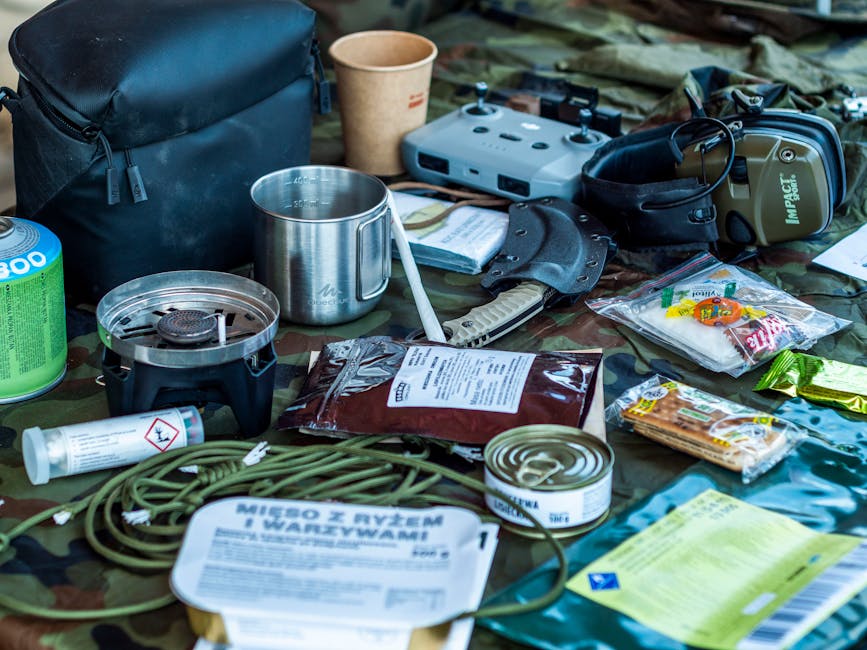
A 2-week food supply is the gold standard for household emergency preparedness. It covers most regional emergencies — extended power outages, winter storms, supply disruptions — without requiring the major investment of a 3-month supply. The good news: for one person, you can do this for $50–$100 using items from any grocery store.
This guide gives you the complete pantry list, storage requirements, and a cost breakdown for multiple budget levels.
What Should You Include in a 2-Week Pantry List?
This list is calorie-verified and designed for minimal cooking. It provides approximately 2,000 calories/day for one adult over 14 days.
Grains & Carbohydrates
- White rice (dry): 7 lbs — approximately 11,500 calories, cooks with water, 25+ year shelf life
- Rolled oats: 3 lbs — approximately 5,100 calories, breakfast staple, 5-year shelf life
- Pasta: 2 lbs — approximately 3,200 calories, versatile, 2-year shelf life
- Crackers / hardtack: 1 lb — approximately 1,900 calories, no-cook option
- All-purpose flour: 2 lbs — for simple flatbreads if you have a heat source
Protein
- Dried beans (pinto, black, kidney): 3 lbs — approximately 4,700 calories, requires soaking and cooking
- Canned beans: 6 cans (15 oz each) — ready to eat, approximately 2,100 calories
- Canned tuna or salmon: 7 cans (5 oz each) — approximately 1,000 calories, high protein
- Canned chicken: 4 cans (12.5 oz each) — approximately 900 calories
- Peanut butter: 1 jar (16 oz) — approximately 2,650 calories, high-fat, excellent calorie density
- Canned sardines or mackerel: 4 tins — approximately 600 calories, omega-3 rich
Fats & Oils
- Vegetable or coconut oil: 16 oz bottle — approximately 3,500 calories, extends shelf life of cooked dishes
- Ghee (clarified butter): optional, longer shelf life than regular butter
Canned Vegetables & Fruit
- Canned tomatoes: 4 cans — base for soups, sauces, rice dishes
- Canned corn / mixed vegetables: 4 cans — nutrition and variety
- Canned fruit: 4 cans — morale boost, vitamins
- Tomato paste: 2 small cans — flavoring
Soups & Ready-to-Eat
- Canned soup / stew: 8 cans — can be eaten cold, comfort food
- Ramen noodles: 14 packages — not nutritionally ideal, but calorie-dense and everyone will eat them
Extras
- Sugar: 1 lb
- Salt: 1 container
- Multivitamins: 30-day supply — critical for nutritional gaps in emergency diet
- Coffee / tea / hot cocoa: morale items, important
- Honey: 1 jar — natural sweetener, practically indefinite shelf life
How Much Water Do You Need for 2 Weeks?
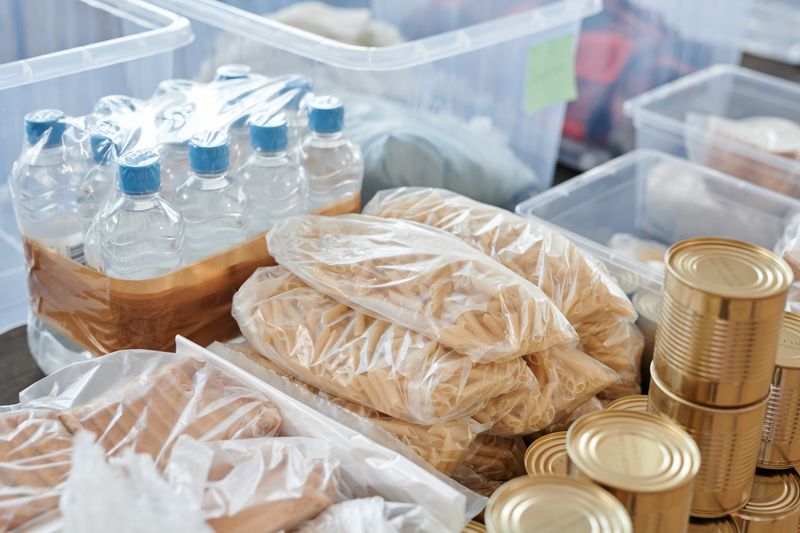
14 gallons minimum per person — this aligns with FEMA's emergency preparedness guidelines, which recommend at least 1 gallon per person per day. Realistically, this is 56 one-liter bottles or two 7-gallon water storage containers. Options:
- WaterBrick containers (3.5 gallon): Stackable, food-grade, portable — 4 per person for 2 weeks
- Cases of bottled water: Bulky but easy. Each 24-pack (16.9 oz bottles) is about 3 gallons
- WaterBOB bathtub bladder: Fills a standard bathtub with up to 100 gallons of clean water during a warning period
What Are the Best Storage Conditions for Emergency Food?
Temperature: The Most Important Factor
Store food below 75°F (24°C). Every 10°F increase roughly halves the effective shelf life of most foods. A garage or attic with summer temperatures of 90°F+ will degrade your 2-year crackers into 6-month crackers quickly. The Extension.org emergency preparedness program recommends a dedicated pantry or interior closet on the ground floor as the ideal long-term storage location.
Best storage locations: basement, interior closet on the ground floor, or a dedicated pantry. If you're limited on cool-space, prioritize your long-shelf-life items (rice, beans) in the coolest spot.
Moisture and Pests
Store dry goods in airtight containers. Food-grade 5-gallon buckets with Gamma-Seal lids are the gold standard for bulk rice and beans. Mylar bags with oxygen absorbers inside buckets extend shelf life even further. Keep food off concrete floors — concrete wicks moisture.
Light
Light degrades food quality over time, especially oils and foods stored in non-opaque packaging. A dark pantry or closet is ideal. If storing in a clear container, wrap it in a black garbage bag.
Food Rotation: How to Do It Right
A 2-week supply only works if the food is still edible when you need it. Rotation is the ongoing process of keeping your supply fresh:
- FIFO (First In, First Out): When you buy new canned goods, put them at the back. Pull from the front. This ensures you always eat the oldest items first.
- Annual review: Once a year, go through your 2-week supply and check best-by dates. Anything expiring in the next 6 months moves to your regular pantry to be used. Replace what you remove.
- Integrate with normal cooking: The easiest rotation strategy is cooking from your emergency pantry once or twice a month. Make chili with your stored beans and tomatoes. Replace what you use. Your supply stays fresh without dedicated effort.
Cost Breakdown
Budget Level: ~$50 (Bare Essentials)
Focus on rice, beans, oats, peanut butter, and a dozen canned goods. No extras, no variety. Meets calorie targets with minimal cost. Best for: people building their first supply who want to start now.
Mid Level: ~$100 (Solid Coverage)
Full list above from a grocery store. Mix of canned goods, dry goods, and a few ready-to-eat items. Includes cooking basics (salt, oil, sugar) and multivitamins. Best for: most households wanting well-rounded coverage.
Premium Level: ~$150–$200 (Pre-Packaged Quality)
Supplement grocery store staples with a quality freeze-dried meal kit for variety and taste — especially for stress eating over 14 days. Mountain House or ReadyWise pouch meals make the last week of any extended emergency significantly more comfortable.
Once you have a 2-week supply covered, it's worth understanding what's needed for longer-term storage. See our 3-month food supply guide for the methodology. For calorie math, use our food storage calculator to size everything for your household.
Recommended Products
Frequently Asked Questions
Related Resources
- Portable power and emergency energy solutions Every survival kit needs reliable emergency power.
How much food do I need for 2 weeks?
For one adult eating 2,000 calories per day, a 2-week supply requires 28,000 calories total. That's roughly 20–25 pounds of combined dry goods, canned goods, and shelf-stable foods. For a family of four, plan for 80,000–100,000 calories.
How much does a 2-week food supply cost?
For one person, a 2-week grocery-store pantry supply costs $50–$100. For a family of four, budget $150–$300 using grocery store staples. Pre-packaged freeze-dried kits designed for 2 weeks run $100–$200 per person but offer longer shelf life.
How should I store a 2-week food supply?
Store in a cool, dark, dry location below 75°F. Use airtight containers — food-grade 5-gallon buckets for bulk dry goods like rice and beans, original sealed cans and packages for everything else. Keep off concrete floors to prevent moisture transfer. Rotate stock every 6–12 months using FIFO (first in, first out).
What is food rotation and why does it matter?
Food rotation means consuming your oldest stored food first and replacing it with fresh stock. This keeps your supply within its best-by dates and ensures you never discover expired food during an emergency. The FIFO method (First In, First Out) is the standard approach — new items go to the back, older items move to the front.