
Water is the highest-priority survival resource — a person can survive weeks without food but only 3 days without water. Yet most families have less than 3 days of water storage. FEMA's emergency preparedness guidelines recommend at minimum a 72-hour water supply, with 2 weeks being the practical target for serious home preparedness.
This guide covers the best containers at each scale, how to properly store and rotate water, and the FEMA-based math for calculating how much you need.
How Much Water Do You Need to Store?
The FEMA formula: 1 gallon per person per day (minimum). Half for drinking, half for sanitation. For pets, add 1/4 gallon per pet per day. In hot weather, illness, or if pregnant, double the drinking water estimate.
| Household Size | 72-Hour Minimum | 2-Week Target | 3-Month Goal |
|---|---|---|---|
| 1 person | 3 gallons | 14 gallons | 90 gallons |
| Family of 4 | 12 gallons | 56 gallons | 360 gallons |
| Family of 4 + dog | 15 gallons | 70 gallons | 450 gallons |
Best Emergency Water Storage Containers
1. Sagan Life 5-Gallon Stackable Water Containers — Best for Most Homes
Stackable 5-gallon food-grade HDPE containers are the most practical solution for most homes. They weigh about 42 lbs when full (manageable for one person), stack up to 3 units high in a closet, and fit in car trunks for evacuation. The Sagan Life containers include a spigot adapter for dispensing without lifting. At $12–15 each, storing 56 gallons (a 2-week supply for a family of 4) costs $135–$170 in containers.
Check current prices on Amazon
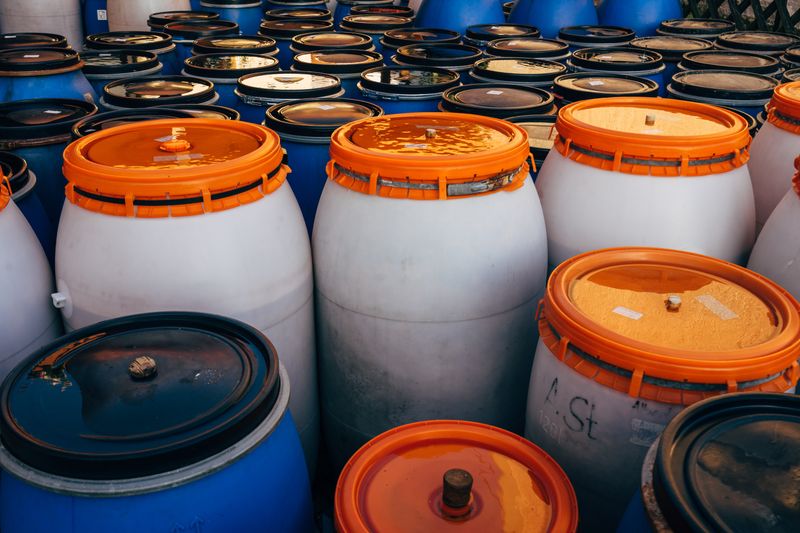
2. 55-Gallon Polyethylene Water Barrel — Best High-Volume Storage
Two 55-gallon food-grade barrels = 110 gallons in about 4 square feet of floor space. These are the right choice for families targeting 2-week+ storage or for rural properties where municipal water may be unavailable for extended periods. Must be placed on a solid surface before filling (459 lbs when full). Use a manual barrel pump or siphon for dispensing — don't tip or carry when full. At $35–50 per barrel, the container cost is very low per gallon stored.
Check current prices on Amazon
3. WaterBOB Emergency Water Bladder — Best Last-Minute Storage
The WaterBOB is a food-grade plastic bladder that fits inside a standard bathtub and holds 100 gallons. It's primarily a last-minute tool — when an outage or hurricane is forecast, you fill it from the tap and seal it. Water stays clean for up to 4 weeks. At $30, every prepared household should have one on hand. It won't replace long-term stored water, but it provides 100 gallons in 20 minutes when you have warning.
Check current prices on Amazon
Water Storage Best Practices
Proper storage maintains water quality over months and years:
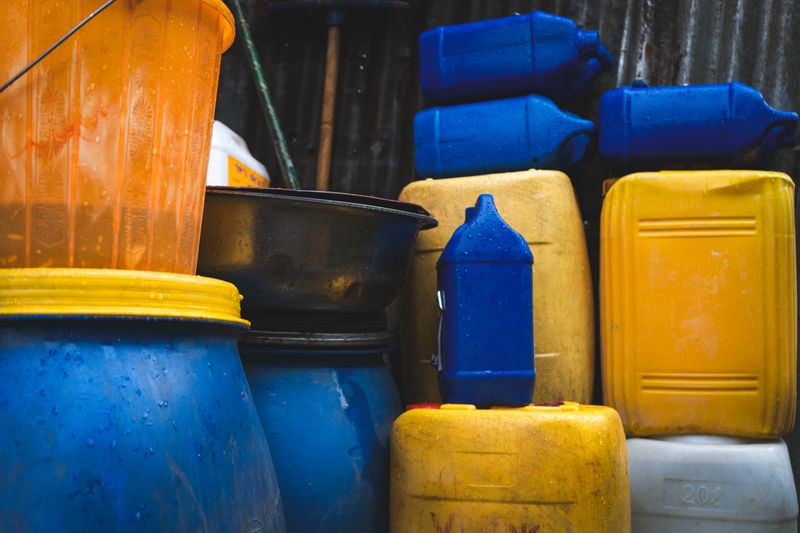
- Use only food-grade containers — HDPE (#2) or polycarbonate (#7 BPA-free). Never use milk jugs (permeable), soda bottles over 1L (acceptable short-term), or any non-food-grade plastic
- Store away from direct sunlight — UV light promotes algae growth. A cool, dark location is ideal
- Keep away from chemicals — gasoline, pesticides, and cleaning chemicals can permeate even sealed food-grade plastic over time
- Rotate every 6–12 months — use the stored water and refill with fresh tap water
- Treat tap water with bleach for extended storage — 1/8 tsp unscented liquid chlorine bleach per gallon, then seal
The CDC guidelines for emergency water storage cover container selection, treatment, and rotation in detail and are the authoritative reference for home water preparedness.
For water purification when stored water runs out, see our comprehensive water purification methods guide. For overall emergency preparedness kit planning that includes water alongside food and supplies, see our 72-hour emergency kit guide and 3-month food supply guide.
Frequently Asked Questions
Related Resources
- Portable power and emergency energy solutions Every survival kit needs reliable emergency power.
How much water should I store for emergencies?
FEMA recommends storing 1 gallon per person per day — half for drinking, half for sanitation. For a 2-week supply for a family of 4, that's 56 gallons minimum. For a 3-month supply, approximately 360 gallons. Most preparedness experts recommend at minimum a 2-week supply stored at home.
What is the best container for storing emergency water?
Food-grade HDPE plastic containers are the best option. Best choices: 5-gallon stackable jugs for small spaces, 55-gallon polyethylene barrels for large-volume storage, and WaterBOB bathtub bladders for last-minute storage before known outages. Never use non-food-grade containers — they may leach chemicals into water.
How long can you store tap water in containers?
Tap water stored in clean, sealed food-grade containers is safe for 6–12 months, after which it should be rotated. Adding 1/8 teaspoon of unscented liquid chlorine bleach per gallon extends shelf life and kills bacteria. Store containers away from direct sunlight and chemicals. Commercially bottled water has a 2-year shelf life.
Can I store water in a 55-gallon barrel indoors?
Yes, but a full 55-gallon barrel weighs approximately 459 lbs (208 kg) — it must be placed on a structurally adequate floor before filling. A single garage floor or basement concrete slab is appropriate; upper-floor residential spaces may not be. Fill the barrel in place using a hose, as it cannot be moved when full.
Get weekly guides from SurvivalLab
No spam. Unsubscribe anytime.