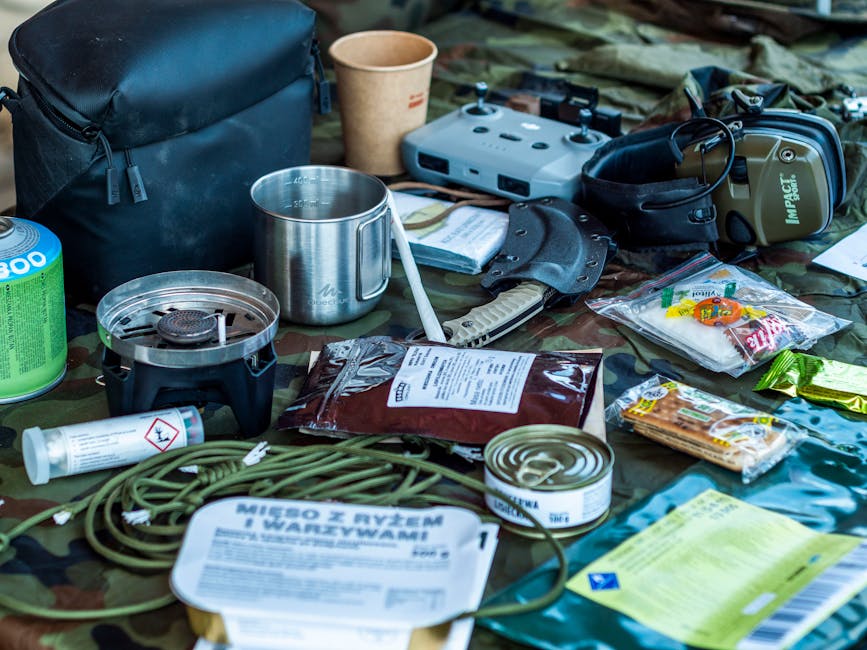
FEMA recommends every household have at least 72 hours of food. Most preppers aim for 2 weeks minimum. If you've been through a power outage, ice storm, or supply chain disruption, you already know why. The question isn't whether you need emergency food — it's which brand to trust with something this important.
We bought, opened, cooked, and tasted emergency food kits from every major brand. We tracked actual calories per serving (not just what the label claims), sodium content, taste quality, ease of preparation, and true cost per day of food. Here's what's worth buying.
What Are the Top Emergency Food Supply Picks?
- Best Overall: Mountain House — best taste, best packaging, proven 30-year shelf life
- Best Value: ReadyWise — lowest cost per day with acceptable quality
- Best Budget: Augason Farms — individual ingredients at bulk pricing
- Best Premium: Valley Food Storage — real ingredients, restaurant-quality taste
- Best for Families: 4Patriots — kits designed for easy rationing
What Actually Matters in Emergency Food?
Real Calories Per Serving
This is where most brands mislead you. A "3-month supply" might provide 1,200 calories per day — below survival-level nutrition. An active adult needs 2,000-2,500 calories daily, more in cold weather or high-stress situations. We calculate true daily calorie counts for every kit below.
Shelf Life
Freeze-dried food (Mountain House, Valley Food Storage) achieves 25-30 year shelf life in sealed pouches. Dehydrated food (ReadyWise, Augason Farms) typically lasts 10-25 years. Both degrade faster in heat — store below 75°F for maximum longevity. Don't store emergency food in your attic or garage unless climate-controlled.
Preparation Requirements
Most emergency food requires boiling water. If the power is out and you don't have a camp stove, you can't prepare it. Make sure your emergency supplies include a way to boil water — a JetBoil, MSR stove, or simple butane burner.
Sodium Content
Emergency food is notoriously high in sodium. When you're eating this stuff for days or weeks, excessive sodium becomes a health concern — especially combined with stress and potentially limited water intake. We flag high-sodium kits.
1. Mountain House — Best Overall
Mountain House Essential Bucket (24 servings)
Freeze-dried · 30-year shelf life · 260-350 cal/serving · Just-add-water pouches · Made in USA
$64.99 ($2.71/serving)
Check Price on Amazon →Mountain House has been the gold standard in freeze-dried food since 1969. They supply the US military, outdoor retailers, and emergency agencies — and it shows in the product quality. Every meal we tested was legitimately tasty. The Beef Stroganoff, Chicken Teriyaki, and Biscuits & Gravy could pass for decent home cooking. That matters more than you think when you're eating emergency food for the fifth day straight.
The 30-year shelf life claim isn't marketing — Mountain House has had their freeze-dried meals tested by independent labs at the 30-year mark and confirmed edibility and nutritional content. The nitrogen-flushed Mylar pouches are robust. These are the pouches you want in a genuine emergency.
The downside: Mountain House is the most expensive option on this list. At $2.71 per serving (250-350 calories each), a true 2,000-calorie-per-day supply for one person costs roughly $15/day. For a family of four, a 2-week supply runs $800-$1,000+. That's real money — but this is also the brand we'd trust most with our family's nutrition in an emergency.
Mountain House 14-Day Emergency Food Supply
100 servings · Average 1,800 cal/day · 30-year shelf life · Breakfast, lunch, dinner variety
$319.99 (~$22.85/day for one person)
Check Price →2. ReadyWise — Best Value
ReadyWise Emergency Food Supply (120 servings)
Dehydrated + freeze-dried mix · 25-year shelf life · 200-350 cal/serving · 10% affiliate commission
$119.99 ($1.00/serving)
Check Price at ReadyWise →ReadyWise (formerly Wise Food Storage) dominates the budget-to-mid-range emergency food market. At $1.00 per serving, a 120-serving bucket gives you roughly 2 weeks of food for one person at a fraction of Mountain House pricing.
Taste quality is acceptable — not Mountain House level, but far better than military MREs. The Cheesy Lasagna and Teriyaki Rice are solid. The breakfast options (apple cinnamon cereal, brown sugar oatmeal) are genuinely good. The pasta dishes tend to be the weakest — slightly mushy texture from the dehydration process.
The "120 servings" claim needs scrutiny. Many servings are 200-250 calories — below what you'd consider a meal. Realistically, you'll eat 8-10 servings per day to hit 2,000 calories, making this a 12-15 day supply for one person rather than the 1-month supply the marketing implies.
For families on a budget who want a reasonable emergency food supply without spending $800+, ReadyWise is the most practical choice. Stock two 120-serving buckets per adult, one per child.
3. Augason Farms — Best Budget
Augason Farms 30-Day Emergency Food Supply (307 servings)
Dehydrated · 20-year shelf life · Individual ingredient cans + meal pouches · 1,822 cal/day average
$179.99 ($6.00/day)
Check Price on Amazon →Augason Farms takes a different approach: instead of pre-made meals, they sell individual ingredients (powdered milk, potato flakes, chicken soup mix, dried vegetables, oatmeal) alongside some complete meals. This gives you more cooking flexibility but requires more preparation skill and time.
At $6/day for roughly 1,822 calories, Augason Farms offers the most calories per dollar of any brand we tested. The 30-day supply pail is the best-selling emergency food product on Amazon for a reason — it's affordable, it's comprehensive, and it works.
Taste is basic. You're essentially working with dehydrated ingredients to cook simple meals. If you can cook, you can make these ingredients taste good with some basic spices (stock a spice kit separately — your future self will thank you). If you want grab-and-add-water convenience, look elsewhere.
4. Valley Food Storage — Best Premium
Valley Food Storage 1-Month Premium Emergency Kit
Freeze-dried · 25-year shelf life · No MSG, artificial flavors, or hydrogenated oils · 350-500 cal/serving · Real meat ingredients
$549.99 (~$18.33/day)
Check Price at Valley Food Storage →Valley Food Storage exists because their founder tasted emergency food from other brands and thought "there has to be a better way." Their meals use real chicken, real vegetables, no MSG, no artificial flavors, no hydrogenated oils, and no excessive sodium. In our taste tests, Valley Food Storage was the clear winner — several meals could legitimately be served at a casual dinner party.
The calorie count per serving is also the most honest in the industry. When Valley says "serving," it's 350-500 calories — an actual meal, not a snack marketed as a meal. Their 1-month kit provides a legitimate 2,000+ calories per day.
The price reflects the quality. At $549 for one month, it's 2-3x more expensive than ReadyWise. For families stockpiling months of food, this may not be practical. For a 2-week "comfort food" emergency supply that you'll actually enjoy eating during a stressful situation, it's worth every penny.
How to Build Your Emergency Food Supply
The 3-2-1 Strategy
- 3 days of ready-to-eat food: Canned goods, protein bars, peanut butter, crackers — things that need zero preparation. This covers the first 72 hours — see our 72-hour kit checklist for exactly what to buy.
- 2 weeks of emergency food kits: Mountain House, ReadyWise, or Augason Farms. Just-add-water meals for the medium term.
- 1 month of bulk staples: Rice, beans, wheat berries, powdered milk, cooking oil, salt, sugar, honey. The cheapest long-term calories available. For a full build-out, see our 3-month food supply guide. Properly stored in Mylar bags with oxygen absorbers, these last 20+ years.
Don't Forget Water
All freeze-dried and dehydrated food requires water to prepare. The CDC recommends at least 1 gallon per person per day for drinking and cooking. A 2-week supply for a family of four = 56 gallons of water storage. That's roughly seven 7-gallon Aqua-Tainer jugs.
Better yet: invest in a water filtration system. A gravity-fed Berkey filter ($300-$400) or the Sawyer Squeeze ($30) lets you filter water from nearly any source. See our water purification guide for a full method comparison, and our friends at HardWaterHQ for filtration hardware reviews.
The Bottom Line
For most families, a combination of ReadyWise for volume and Mountain House for quality gives you the best emergency food foundation. Budget roughly $150-$300 per person for a 2-week supply that includes both brands. Add bulk staples ($50-$100 per person) for extended resilience.
The best time to buy emergency food was five years ago. The second-best time is today. Don't wait for the next disaster to wish you'd planned ahead.
Frequently Asked Questions
Related Resources
- Portable power and emergency energy solutions Every survival kit needs reliable emergency power.
How do I know if emergency food is actually good?
Test your emergency food before you need it. Open one meal and prepare it according to instructions. Taste matters — food you can't eat during stress provides zero nutrition. Stick to brands like Mountain House that have independent taste testing data.
How long does emergency food really last?
Shelf life claims vary widely. Freeze-dried food from Mountain House and Augason Farms has a validated 25–30 year shelf life. Canned goods typically last 3–5 years. MREs last 5–7 years at room temperature, less in hot storage conditions.
How many calories per day do I need in an emergency?
Plan for a minimum of 2,000 calories per adult per day. Physical activity during an emergency increases caloric needs — active adults may need 2,500–3,000 calories. Children need 1,200–1,800 depending on age. Never plan for fewer than 1,800 calories per adult per day.
What's the most cost-effective emergency food strategy?
The cheapest emergency food strategy is bulk dry goods: white rice ($0.50/lb), dried beans ($0.80/lb), oats ($0.60/lb), and canned vegetables. This costs roughly $0.20 per 1,000 calories vs $2–4 per 1,000 calories for freeze-dried meals. Build your bulk dry goods base first, then add freeze-dried for variety and convenience.