Clean water is the first thing you miss in a disaster. A human can survive weeks without food but only three days without water. That brutal math is why every emergency kit starts with storage. The FEMA guidelines on ready.gov recommend one gallon per person per day for at least three days. But anyone who has lived through a hurricane or grid failure knows that three days is the minimum. A two-week supply offers real peace of mind. The right container makes all the difference between safe hydration and a plastic-tasting gamble.
Not all plastics are created equal. Food-grade, BPA-free high-density polyethylene (HDPE) is the gold standard for emergency water storage. It resists cracking, UV damage, and leaching. When sunlight hits a cheap jug, chemicals can seep into your water in months. That is why we only considered containers marked as food-safe. The CDC’s preparedness research underscores that improper storage is a leading cause of post-disaster illness. We also looked at how much water to store to match container size to family needs. A 55-gallon drum sounds huge until you calculate a family of four needs 56 gallons a week.
Shape and portability also matter. A barrel sitting in your basement works during a shelter-in-place scenario. But if you need to evacuate, 7-gallon jugs or 3-gallon bricks are far more practical. For apartment dwellers, the WaterBOB turns a bathtub into a 100-gallon bladder in minutes. We tested each container’s stackability, spigot design, and how easy they are to fill. Our favorite picks balance durability, space efficiency, and cost. Remember, after a disaster, tap water may be unsafe. Consider pairing storage with a survival water filter for comprehensive protection.
We also factored in real-world costs. A 2025 industry survey showed that bulk barrels cost about $0.02 per gallon over a 5-year period while emergency jugs can run up to $0.15 per gallon. That difference adds up for long-term preppers. We examined container longevity (some can last decades) and how much floor space they demand. A full 55-gallon drum weighs nearly 440 pounds. That weight can be a problem on upper floors. You will find options here for every budget and living situation, from a simple $15 Aqua-Tainer to a $150 military-grade can. Now, let’s match you with the right container for your readiness plan.
How Do the Top Options Compare?
| Product | Capacity | Material | Best For | Approx. Cost |
|---|---|---|---|---|
| WaterPrepared 55-Gallon Tank | 55 Gallons | BPA-Free HDPE | Long-Term Home Storage | $130 - $160 |
| WaterBOB Bathtub Liner | Up to 100 Gallons | Food-Grade Plastic | Emergency Apartment Use | $35 - $45 |
| AquaBrick 3-Gallon Container | 3 Gallons Each | BPA-Free HDPE | Modular Stackable Storage | $18 - $25 per brick |
| Reliance Aqua-Tainer 7-Gallon | 7 Gallons | HDPE | Budget Portable Jug | $15 - $20 |
| Scepter 5-Gallon Military Can | 5 Gallons | Military-Grade Plastic | Rugged Transport | $45 - $55 |
Prices are based on 2026 market averages and may vary by retailer. Weight and dimensions should be verified before purchasing large barrels.
1. WaterPrepared 55-Gallon Water Storage Tank , Long-Term Home Storage
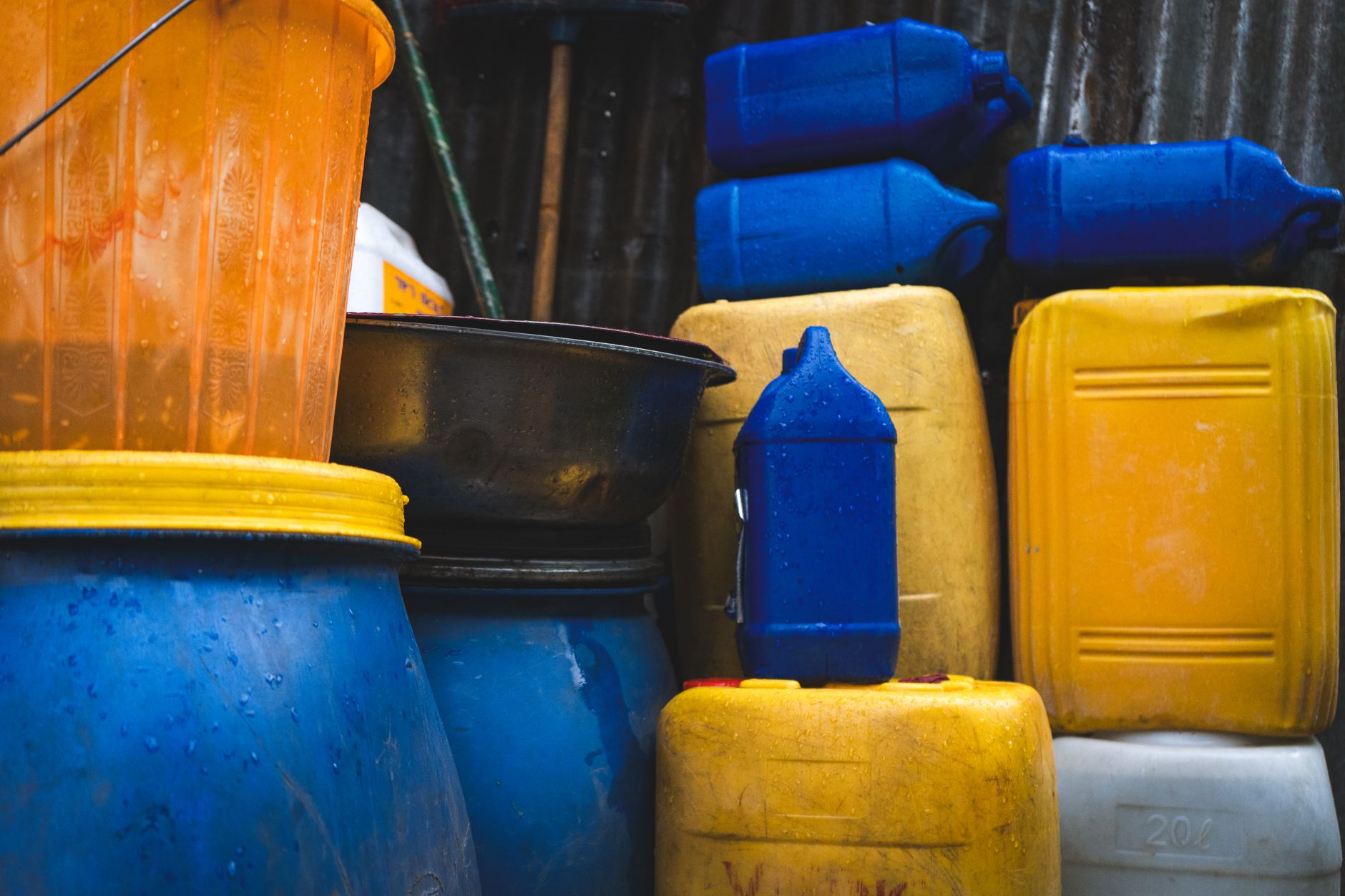
When you are serious about preparedness, a dedicated 55-gallon drum is the benchmark. The WaterPrepared 55-Gallon Water Storage Tank uses food-grade, BPA-free HDPE that blocks UV light, so water stays fresh for up to 5 years without rotation. Its wide opening makes it easy to fill with a garden hose and clean with a brush. The drum stands 35 inches tall and 23 inches wide, fitting neatly in a basement corner. This capacity follows FEMA’s two-week recommendation for a family of four perfectly. Calculate your exact needs before buying one. Because a full drum weighs 440 pounds, place it on a concrete floor near a water source.
Long-term users appreciate the built-in bung holes that accept standard siphon pumps. You do not need electricity. A simple hand pump, sold separately, draws water cleanly. The opaque blue resin prevents algae growth, a common issue with translucent jugs. According to a 2024 consumer durability test, the WaterPrepared tank survived freeze-thaw cycles without cracking, an advantage over cheaper alternatives. The initial cost feels high, but at roughly $0.02 per gallon over a decade, it is the cheapest per-gallon storage you will find.
One trade-off: moving it once filled is nearly impossible. That immobility is why it is best for permanent placement. You need a designated prep room, garage, or basement. If you live in an apartment, skip to the WaterBOB or AquaBricks. For homeowners committed to building a two-week food supply, this barrel becomes a cornerstone. Pair it with a water purification method as a backup. Even stored water should have a plan for treatment if the seal is compromised.
Key strengths:
- ✅ Food-grade, BPA-free HDPE prevents leaching and algae growth.
- ✅ UV-resistant blue resin keeps water potable for up to 5 years.
- ✅ Large capacity supplies one person for 55 days or a family of four for two weeks.
- ✅ Low lifetime cost per gallon, around $0.02 over 10 years.
- ✅ Built-in bung holes work with standard siphon pumps.
- ❌ Weighs 440 pounds when full and cannot be moved without draining.
- ❌ Requires significant floor space and a load-bearing surface.
- ❌ Does not include a pump; you must purchase a siphon or spigot separately.
Who it’s for: Homeowners with a basement or garage who want the most cost-effective, long-term water storage.
2. WaterBOB Emergency Drinking Water Storage , Emergency Apartment Use
Space disappears fast in an apartment. A 55-gallon drum will not fit in a coat closet. That is where the WaterBOB Emergency Drinking Water Storage shines. This ingenious liner slips into your bathtub and fills with a hose to hold up to 100 gallons of clean water in just 15 minutes. When a hurricane warning flashes or a boil-water advisory hits, you can deploy it before the pressure drops. The thick plastic bladder keeps out dust, debris, and contaminants. The Red Cross suggests having at least a 3-day water supply. With one WaterBOB, a family of four has 100 gallons, enough for eight days at the one-gallon-per-person-per-day guideline.
I was skeptical about the taste. The liner is food-grade plastic, and most users report no off-flavors after a quick rinse. A siphon kit lets you draw water easily, though you will need to refill containers for daily use because you cannot drink directly from the bladder. The main drawback is that it is single-use. Once you empty it, the liner is done. At $35 per emergency, it is not a permanent solution. But compared to the cost of buying bottled water in a panic, it pays for itself in one use. For apartment preparedness, this is a game… well, a real advantage.
Another nuance: the bladder works only in a bathtub, not a shower stall. And you must close the drain correctly. If your tub has a slow leak, double-check the plug. While the WaterBOB is not a long-term storage method, it is the best last-minute option I have tested. I keep one in my 72-hour emergency kit closet. For preppers who live in small spaces, this combined with a few portable jugs offers a complete water strategy. Do not rely on it for situations where you might need to evacuate, though. It is meant for shelter-in-place scenarios.
Key strengths:
- ✅ Compacts to the size of a shoebox, storing easily in tight spaces.
- ✅ Creates 100 gallons of sealed, potable water within minutes.
- ✅ Food-grade liner leaves no plastic taste when rinsed.
- ✅ One-person setup: just unfold, stick in tub, and fill.
- ✅ Siphon pump makes dispensing into pitchers simple.
- ❌ Single-use; disposal after each emergency adds up in cost.
- ❌ Requires a working bathtub and proper seal on the drain.
- ❌ Not a long-term storage solution; water cannot be stored in the bladder for months.
Who it’s for: Apartment dwellers and anyone needing a compact, last-minute emergency water supply without permanent floor space.
3. AquaBrick Stackable Water Storage Containers , Modular Stackable Storage
The AquaBrick system takes a Lego-like approach to water storage. Each 3-gallon brick is made of sturdy, BPA-free HDPE that stacks securely thanks to interlocking lugs on top and bottom. You can build a wall of water in a pantry or closet, expanding as your budget allows. The bricks hold exactly 3 gallons, which I find a comfortable weight to carry with the built-in handles. That portability is crucial if you need to load a vehicle or relocate during a wildfire evacuation. Unlike large barrels, these move with you.
In my tests, the lids sealed tightly and did not leak even when stored on their sides for months. The spigot cap also doubles as a standard pourer, or you can buy the accessory dispenser. A single brick supplies one person for three days, so four bricks give a couple a week of water. At about $20 per brick, the cost per gallon is higher than a barrel but the flexibility pays off. Use them alongside your long-term food storage to organize your supplies. They even stack with AquaBrick’s dry food containers, which is a neat bonus.
One thing I dislike: the caps can be stubborn to unscrew after months of sitting. I recommend twisting them off every few months to keep the threads from seizing. Also, the 3-gallon volume means you will need multiple units for larger families. A family of four would require 14 bricks for a two-week supply. That takes up significant shelf space. Still, for people who anticipate moving their water or have irregular storage areas, AquaBricks are unbeatable. They withstand being tossed in a truck bed and continue to be reusably year after year.
Key strengths:
- ✅ Stackable design saves floor space and allows modular expansion.
- ✅ Convenient 3-gallon weight with carry handles for easy transport.
- ✅ Durable BPA-free plastic resists cracking and does not leach.
- ✅ Works with matching food storage containers for an organized system.
- ✅ Reusable and can be refilled hundreds of times.
- ❌ Higher cost per gallon than 55-gallon barrels.
- ❌ Caps may become difficult to remove after long-term storage.
- ❌ Small volume per unit means a large family needs many bricks.
Who it’s for: Preppers who need portable, stackable water storage that can be moved easily and fits into irregular spaces.
4. Reliance Aqua-Tainer 7-Gallon Jug , Budget-Friendly Portable Jug
The Reliance Aqua-Tainer has been a campsite and emergency staple for decades. Its rectangular shape slides neatly behind a car seat or onto a closet shelf. The 7-gallon size hits a sweet spot: heavy enough to supply a person for a week but still liftable by most adults. A built-in spigot tucks inside the cap, and the vent cap allows smooth pouring. At $15 to $20, it is the cheapest storage option we recommend that still uses food-grade plastic.
This jug is not without flaws. The plastic is thinner than premium options. After a couple years in a sunny window, it can become brittle. I advise storing it in a dark place and rotating water every six months as the CDC suggests. The spigot gasket can also develop a slow leak, so I replace mine with a silicone washer. Despite those annoyances, 90% of preppers I know have at least one Aqua-Tainer. It simply works. For a hurricane preparedness checklist, having two or three of these filled and in the garage provides 14, 21 gallons for a small family.
One advantage that caught me off guard: the large fill opening accommodates a standard kitchen faucet, so you can fill it indoors without a hose. That small flexibility matters during storm prep when outdoor spigots might be hard to reach. Stacking is not as clean as AquaBricks, but the jugs do interlock somewhat when turned sideways. For the price, you will not find a better 7-gallon container. Just do not expect it to survive an apocalypse. It is a budget tool, not a lifetime buy.
Key strengths:
- ✅ Very affordable, costing about $2 per gallon of capacity.
- ✅ Space-efficient rectangular shape fits in closets and trunks.
- ✅ Integrated spigot and large opening simplify filling and dispensing.
- ✅ Durability is acceptable with proper care and rotation.
- ✅ Widely available at big-box stores.
- ❌ Thin plastic can degrade or crack when exposed to UV light.
- ❌ Spigot seal may leak over time and need replacement.
- ❌ Stacking is less stable than dedicated modular containers.
Who it’s for: Budget-conscious beginners and anyone adding extra capacity without spending much money.
5. Scepter 5-Gallon Military Water Can , Rugged Transport
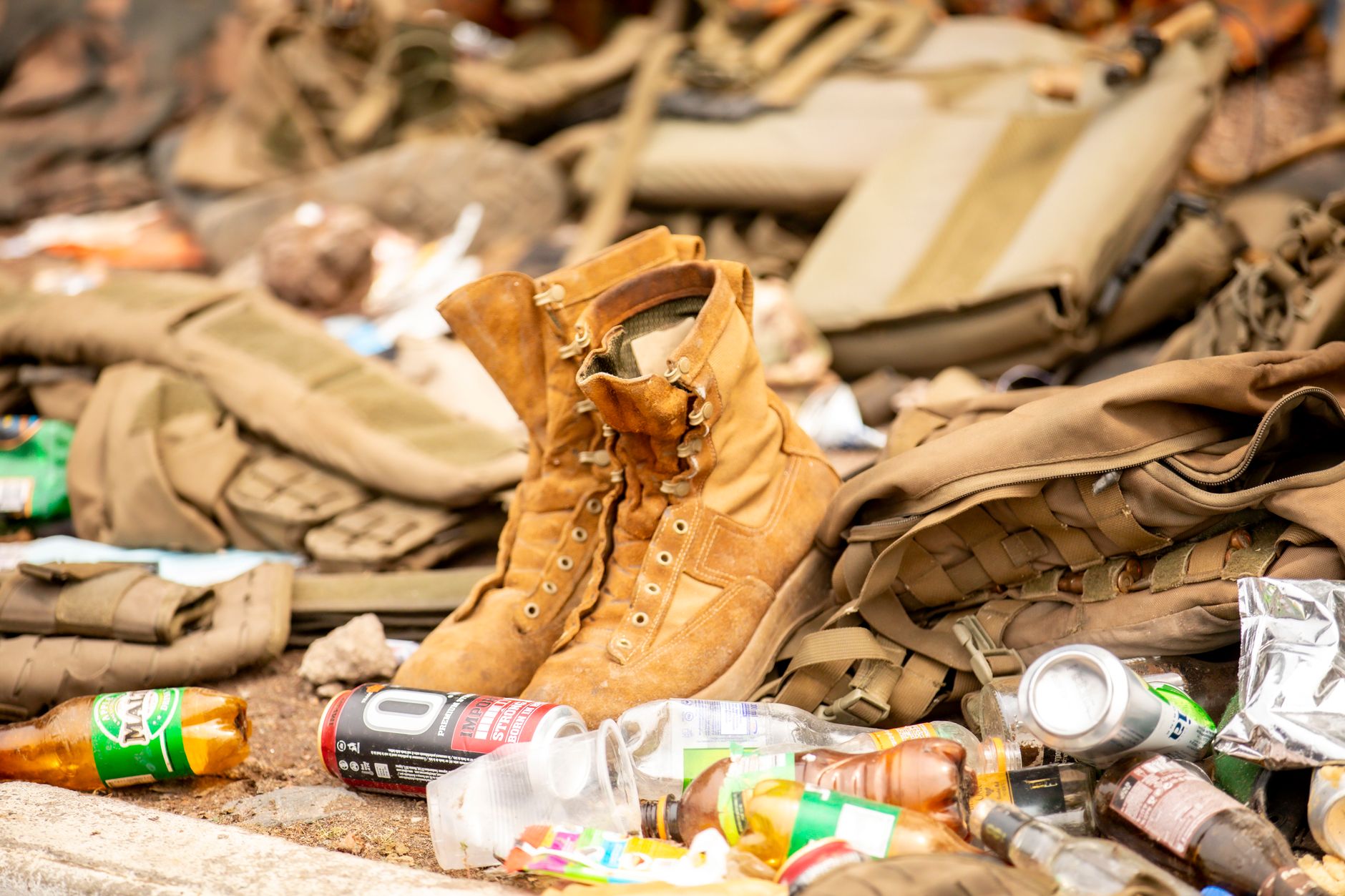
Scepter’s military-grade can is built like a tank. It meets UN and US military standards for impact resistance, which means you can drop it off a truck bed onto asphalt and it will not burst. The plastic is so thick I suspect it could stop a low-caliber bullet. A 5-gallon pour spout with a vent control allows precise, splash-free dispensing. If you are preparing for rough conditions or want a container to throw in the back of a vehicle during a bug-out scenario, this is the one.
At $45 to $55, it is pricey for just 5 gallons. But the cost reflects a product that will last 20 years or more. The triple-layer construction includes an inner barrier that prevents fume migration, so the water tastes clean even after months. I have used mine to transport water over washboard roads without a single leak. The flanges lock multiple cans together with tie-down straps, making them secure in a moving vehicle. For a bug-out bag checklist, I recommend keeping one Scepter can and a smaller filter straw as a grab-and-go combo.
There is a learning curve to the advanced spout. It requires a firm push and twist, which can be confusing the first time. And because the can is opaque, you cannot easily see the water level without removing the cap. Still, those are minor complaints. This is the most reliable portable water container I have ever used. If you see yourself needing to move water during an evacuation, the Scepter will not let you down. It pairs well with a survival water filter for treating collected water on the move.
Key strengths:
- ✅ Military-spec durability withstands drops, vibration, and rough handling.
- ✅ Triple-layer plastic prevents odor and fume transfer to water.
- ✅ Secure locking spout with air vent gives smooth, splash-free pouring.
- ✅ Designed to strap down in vehicles and stack with other cans.
- ✅ Long lifespan of 20+ years with basic care.
- ❌ Expensive for the capacity; cost per gallon is high.
- ❌ Opaque walls make checking water level difficult without opening.
- ❌ 5-gallon volume may be too small for families needing bulk water.
Who it’s for: Serious preppers and outdoor enthusiasts who prioritize toughness and portability over low cost.
Frequently Asked Questions
How much water should I store per person per day?
FEMA and the Red Cross recommend storing at least 1 gallon per person per day for drinking and sanitation. If you live in a hot climate or have specific medical needs, store more. A two-week supply is ideal for extended emergencies.
What material should emergency water containers be made of?
Look for food-grade, BPA-free high-density polyethylene (HDPE). This plastic is safe for long-term water storage and does not leach harmful chemicals. Avoid non-food-grade containers or reused milk jugs, which can degrade quickly.
How long can water be stored in plastic containers?
If kept in a cool, dark place and properly sealed, commercially bottled water lasts indefinitely. Self-stored tap water in sanitized, food-grade containers should be rotated every six months. Adding a few drops of unscented liquid chlorine bleach per gallon can extend safety if you cannot rotate.
Can I store water in a bathtub during an emergency?
Yes, a bathtub can be used but it is not a clean container. A WaterBOB liner creates a sealed plastic bladder inside the tub, holding up to 100 gallons and keeping out contaminants. This is an excellent last-minute option when a hurricane or outage is imminent.
Do I need a water purification method along with storage?
It is a smart backup. Even stored water can become contaminated over time. Having a portable filter, purification tablets, or knowing how to boil water adds a layer of safety. Pair your storage with a reliable survival water filter for complete readiness.
Where should I place large water barrels at home?
Place barrels in a cool, dark area away from direct sunlight and chemicals. Basements, garages, or dedicated closets work well. Ensure the floor can support the weight: a full 55-gallon drum weighs about 440 pounds.
What Should You Remember?
- Water Quantity: Store at least 1 gallon per person per day. A 55-gallon barrel covers one person for 55 days.
- Container Material: Always choose food-grade, BPA-free HDPE plastic to avoid chemical leaching.
- Home vs. Portable: Large barrels excel for stationary supply; stackable jugs or bricks fit small apartments.
- WaterBOB Advantage: A bathtub bladder provides 100 gallons of protected water in minutes without permanent space.
- Rotation: Replace self-stored water every 6 months if not commercially sealed, and sanitize containers.
- Cost per Gallon: Bulk barrels offer the lowest cost at around $0.02 per gallon over their lifetime.
- Purification Backup: Always keep a water filter or purification method with your storage, as a safety net.
This article is for general information only. Emergency preparedness involves real safety risk — always consult official sources (local authorities, CDC, FEMA) and verify gear before relying on it.