Disasters strike without warning. A 72-hour emergency kit with food and water can be the difference between surviving and struggling. The Federal Emergency Management Agency, FEMA, advises that every household keep a minimum three-day supply of non-perishable food and safe drinking water. This isn’t extreme prepping. It’s basic insurance against hurricanes, power outages, floods, or supply chain disruptions. Yet a 2023 FEMA survey found only 39% of Americans have an emergency kit. You don’t need to be a statistic. Start with the right food and water. This 72-hour kit guide walks through the other gear, but your calories and hydration are the heart of the kit.
Water is non-negotiable. The Centers for Disease Control and Prevention, CDC, stresses that clean water prevents disease outbreaks after emergencies. Plan for one gallon per person per day. That covers drinking, cooking, and basic hygiene. Store commercially bottled water or fill clean containers with tap water and treat it with unscented bleach. Learn exactly how much water to store for different scenarios. If you’re evacuating, water purification tablets or portable filters become critical because you can’t haul 12 gallons in a backpack.
Food choices depend on your budget and plan. A DIY kit using canned goods and energy bars can cost as little as $30 per person. Premium freeze-dried meals for three days may run $60 to $150. The average adult needs about 2,000 to 2,500 calories per day, especially under stress. More if you’re doing physical evacuation. Shelf life matters too. Cans need rotation every few years. Freeze-dried pouches last decades. Building a budget emergency kit doesn’t mean cutting corners on nutrition. You just trade shelf life for immediate savings.
The Red Cross recommends storing food you already eat to avoid digestive surprises during a crisis. Swap items regularly. Check expiration dates every six months when you test smoke alarms. Our guide to the best emergency food supplies for 2026 compares top-rated commercial options. But a mix of ready-to-eat items and water purification gear often covers all bases. Whether you shelter in place or hit the road, the checklist below breaks down the top five food and water strategies for your 72-hour kit. Choose what fits your risk profile and space.
How Do the Top Options Compare?
| Option | Best For | Shelf Life | Approx Cost per Person | Ease of Use |
|---|---|---|---|---|
| Freeze-Dried Meals | Long-term storage & grab-and-go | 25-30 years | $60-$150 | Requires boiling water |
| MREs | No-cook rugged scenarios | 3-5 years | $40-$80 | Self-heating or cold |
| DIY Food Kit | Budget & customized meals | Varies (6 mo - 2 yr) | $30-$60 | Canned opener needed |
| Water Storage Containers | Home or car stationary storage | Indefinite (properly treated) | $20-$50 | Just grab & pour |
| Water Purification Methods | Portable & multi-source | Filter life: 1,000+ gal | $20-$80 | Requires water source |
Costs are approximate and based on single-person 3-day supply. Shelf life depends on storage conditions. Cool, dark, dry places extend longevity.
1. Freeze-Dried Meal Kits , Long shelf life and minimal prep
Freeze-dried meals from trusted brands like Mountain House and ReadyWise are the gold standard for long-term emergency food. They lock in nutrients and flavor, then vacuum-seal them in lightweight pouches. A single pouch can contain 600-800 calories and rehydrates in about 10 minutes with boiling water. Properly stored in a cool, dry place, these meals stay edible for 25 to 30 years. That makes them a true set-it-and-forget-it solution. The weight savings are significant. A three-day supply for one person fits into a shoebox and weighs under 4 pounds.
However, you must have a heat source and clean water to prepare them. Pair your kit with a compact camp stove and a survival water filter. While the upfront cost stings, the per-meal expense over decades is lower than rotating grocery store alternatives. Our comparison of the best freeze-dried brands highlights Mountain House’s 30-year taste guarantee versus ReadyWise’s value pricing. For variety, choose kits with breakfast, entrees, and desserts. Watch sodium levels if you have dietary restrictions. Some meals pack over 1,000 mg per pouch.
Key strengths:
- ✅ 25-30 year shelf life when stored properly
- ✅ Lightweight and compact for bug-out bags
- ✅ Wide variety of menu options available
- ✅ Fast rehydration with hot water only
- ✅ Individually sealed pouches prevent cross-contamination
- ❌ Requires a heat source and boiling water
- ❌ Higher upfront cost per calorie than canned goods
- ❌ Some meals contain elevated sodium levels
Who it’s for: Anyone who wants a set-it-and-forget-it emergency food supply that’s ready to go for decades.
2. MREs (Meals Ready-to-Eat) , Zero preparation in the field
MREs are the military’s answer to hot chow without a kitchen. Civilian versions from Sopakco and AmeriQual mirror the originals. Each sealed pouch contains a full meal with entrée, sides, snacks, drink mix, utensils, and a flameless ration heater. Just add a splash of water to the heater pouch and it steams your meal in minutes. No fire needed. That self-sufficiency makes MREs perfect for a bug-out bag or car kit where boiling water isn’t an option.
A typical MRE delivers between 1,200 and 1,500 calories. For a 72-hour kit, two per day cover your energy needs. The trade-off is weight and bulk. An MRE weighs about 1.5 pounds and takes up as much space as several freeze-dried pouches. Shelf life is shorter too. Expect 3 to 5 years in cool storage, but high temperatures accelerate degradation. Some people experience digestive discomfort if they eat MREs for extended periods. The taste is functional, not gourmet. Still, for short-term emergencies, the convenience is unmatched.
Key strengths:
- ✅ Zero external water or heat required
- ✅ High calorie density with full meal components
- ✅ Rugged, water-resistant packaging
- ✅ Includes flameless heater and utensils
- ✅ Wide menu variety from multiple manufacturers
- ❌ Heavy and bulky for backpacking
- ❌ Shelf life limited to 3-5 years
- ❌ Some users report digestive issues with frequent consumption
Who it’s for: Those who need grab-and-eat meals during evacuations or in a bug-out bag where cooking isn’t possible.
3. DIY Food Kit (Grocery Store Supplies) , Customizing nutrition on a budget
You don’t need special survival food. Your pantry already holds the ingredients. Canned beans, tuna, soups, vegetables, and fruits form the backbone. Add energy bars, peanut butter, crackers, trail mix, dried fruit, and instant oatmeal. For three days, count calories and aim for food your family enjoys. A 2,000-calorie day might stack a granola bar (200 cal), peanut butter crackers (400 cal), a can of chili (400 cal), dried fruit (300 cal), trail mix (400 cal), and a chocolate bar (300 cal).
The cost runs $30 to $60 per person. The catch? Rotation. Canned goods last 1 to 2 years but taste and texture decline. Heat, cold, and time ruin fats in nuts and oils. Set a calendar reminder every six months to swap items into your regular meals and replace them. Use our food storage calculator to plan quantities. Don’t forget a manual can opener. Some preppers stash single-serving pop-top cans to avoid that hassle. With a DIY kit, you control sodium, allergens, and preferences. There’s no mystery pouch your kid might refuse.
Key strengths:
- ✅ Lowest cost, often under $30 per person
- ✅ Full control over nutritional content and allergens
- ✅ Uses familiar foods that family will actually eat
- ✅ Easy to replenish from any grocery store
- ✅ No special preparation equipment needed for many items
- ❌ Requires regular rotation every 6-12 months
- ❌ Heavier and bulkier than dehydrated options
- ❌ Canned goods may need a separate can opener
Who it’s for: Budget-conscious preppers and families with picky eaters who prefer regular grocery items.
4. Water Storage Containers , Staying put with reliable water access
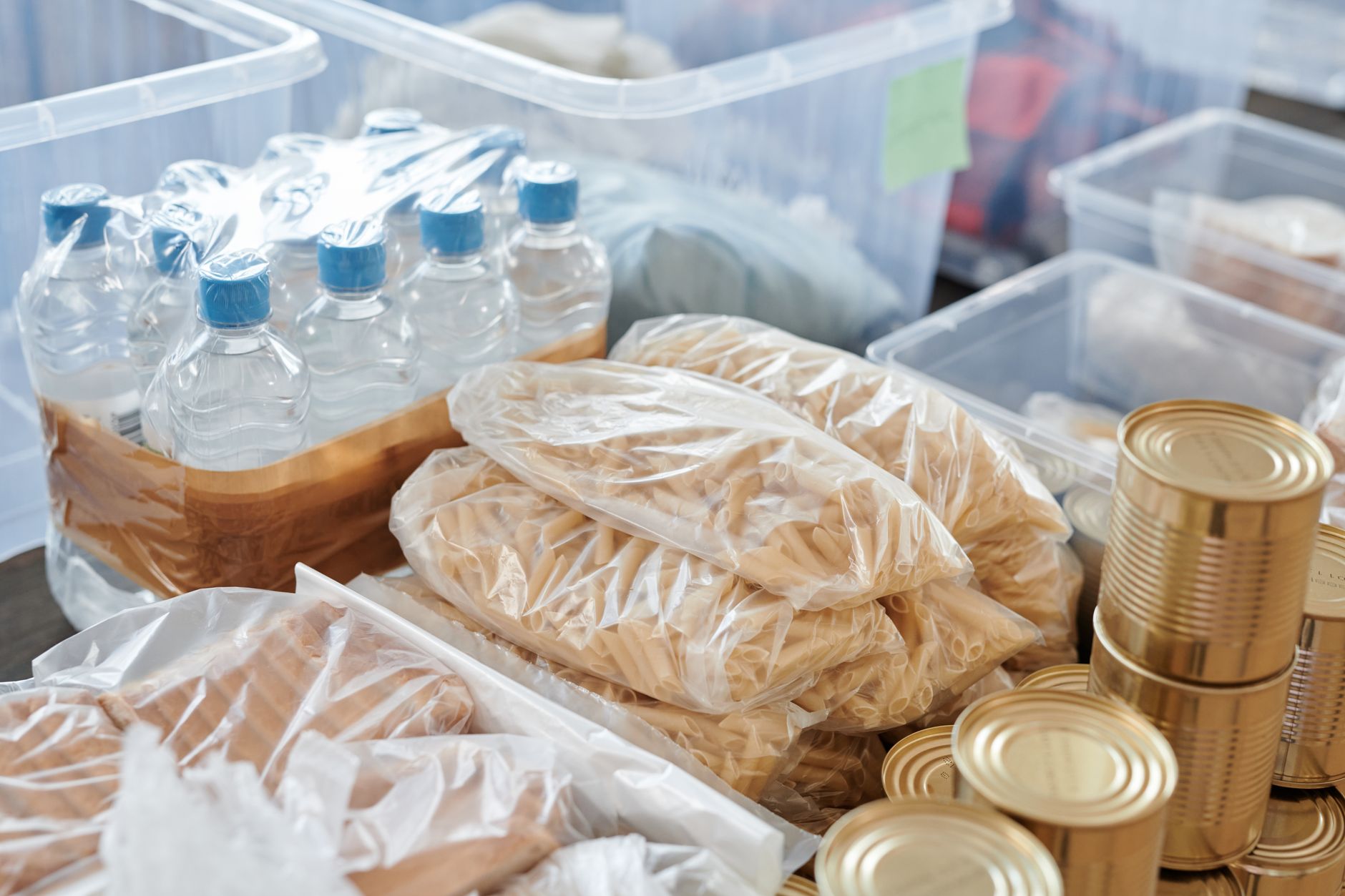
Stored potable water is immediate. You open a jug and drink. No tablets, no filters, no worrying if the creek is clean. FEMA says 1 gallon per person per day. A family of four needs 12 gallons for 72 hours. You can buy commercially sealed bottled water or fill food-grade containers yourself. Options like 5-gallon stackable jugs and 55-gallon drums fit different spaces. Our picks for the best emergency water storage containers highlight BPA-free, sturdy choices.
Treat tap water with 8 drops of unscented bleach per gallon before sealing to prevent microbe growth. Store containers in a cool, dark corner away from chemicals. Rotate water every six months. A gallon weighs 8.34 pounds, so this strategy works for home or a car trunk, not a backpack. For shelter-in-place scenarios like ice storms or power outages, nothing beats the simplicity of ready-to-pour water. Keep a few gallons in your vehicle during summer road trips too. Just don’t let them freeze.
Key strengths:
- ✅ Immediately drinkable without treatment
- ✅ No reliance on external water sources during crisis
- ✅ Durable containers can be reused for years
- ✅ High capacity for multi-person or multi-day needs
- ✅ Bottled water has commercial quality control
- ❌ Heavy and space-intensive at 8.34 lbs per gallon
- ❌ Requires regular rotation to maintain freshness
- ❌ Not portable for evacuation on foot
Who it’s for: Homeowners or car kit builders who plan to shelter in place.
5. Portable Water Purification Methods , Lightweight, on-the-go water safety
When you can’t carry three days of water, carry the means to make any water safe. Portable filters like the Sawyer Squeeze and LifeStraw use hollow fiber membranes to physically remove bacteria and protozoa. They last for thousands of gallons. The Sawyer Squeeze can process up to 100,000 gallons with backflushing. Filtration alone won’t kill viruses, so add chemical tablets such as Aquatabs or a UV device like the SteriPEN. Tablets use chlorine dioxide to neutralize viruses but leave a slight taste. UV pens work in 90 seconds but need batteries.
A combination filter-and-tablets kit weighs under 6 ounces. That’s negligible in a bug-out bag. Review our guide to the best survival water filters for side-by-side comparisons. Know the limitations. Filters clog in murky water. Tablets won’t clear sediment. Boiling remains the ultimate backup. For a 72-hour kit, a lightweight filter plus backup purification covers you if stored water runs out or you must relocate through unknown water sources.
Key strengths:
- ✅ Extremely lightweight, often under 6 ounces for a filter and tablets
- ✅ Filters can process thousands of gallons over their lifespan
- ✅ Effective against a broad spectrum of biological pathogens
- ✅ Versatile for streams, lakes, and questionable tap water
- ✅ Eliminates need to carry heavy water
- ❌ Requires finding a water source in the environment
- ❌ Filters can clog or be damaged by freezing
- ❌ Chemical tablets may leave an unpleasant chlorine taste
Who it’s for: Backpackers, bug-out bag packers, and anyone who might need to treat wild water.
Frequently Asked Questions
How much water should I store for a 72-hour kit?
Store at least one gallon per person per day, so 3 gallons per person. Include extra for pets, medical needs, and hot climates. If storing commercially bottled water, check expiration dates; if self-stored, rotate every 6 months.
What food requires no cooking and lasts long?
Energy bars, trail mix, peanut butter, canned tuna, dried fruit, and military-style MREs need zero prep. Freeze-dried meals only require boiling water. Choose based on your access to heat and water.
Can I use tap water for emergency storage?
Yes, if you treat it with 8 drops of unscented bleach per gallon and store in food-grade containers. Let it sit 30 minutes before sealing. However, commercial bottled water is simpler and needs no treatment.
How do water purification tablets work?
Tablets typically use chlorine dioxide or iodine to kill bacteria, viruses, and protozoa. Drop them in suspect water, shake, and wait 30 minutes to 4 hours depending on the product. They won’t remove sediment or chemicals.
What's the cheapest way to build a 72-hour food supply?
DIY kits using canned goods and dry staples like rice and beans are the most affordable, often under $30 per person. Focus on calorie-dense items and rotate regularly.
Should I include a stove in my emergency kit?
If you choose foods that need heating, include a compact camp stove and fuel canisters. But for simplicity, many preppers pack no-cook foods to eliminate the need for fire. It depends on your scenario.
What Should You Remember?
- 1-Gallon Rule: Store at least 1 gallon of water per person per day; double for hot environments or high activity.
- Calorie Targets: Aim for 2,000-2,500 calories per person per day; high-stress survival requires more energy.
- Shelf Life Trade-Offs: Freeze-dried meals last 25 years but cost more; DIY kits are cheap but need rotation.
- No-Cook Advantage: Ready-to-eat foods eliminate the need for stoves, saving weight and complication.
- Purification Backup: Even with stored water, carry a filter and tablets for redundancy.
- Regular Rotation: Check and replace food and water every 6 months when you change smoke detector batteries.
- Family Customization: Pack foods your family actually eats to reduce waste and stress.
This article is for general information only. Emergency preparedness involves real safety risk — always consult official sources (local authorities, CDC, FEMA) and verify gear before relying on it.