Water is the single most critical element in any preparedness plan. The FEMA ready.gov guidelines state that a person can survive only three days without it. Yet many homes lack enough stored water to ride out even a 72-hour disruption. A broken main, chemical spill, or grid-down scenario can cut off tap water without warning. The CDC’s public health preparedness research confirms that waterborne illness spikes after disasters when clean water runs short. Starting your storage now, before the next storm or supply chain hiccup, is essential.
The Red Cross advises storing at least two weeks of water per household member. Statistically, the average American uses 82 gallons per day, but for survival, you can get by on 1 gallon per person per day for drinking and hygiene. With the frequency of weather-related power outages up 67% since 2000 according to NOAA, building a reliable cache has never been smarter. This guide compares the best storage solutions for home preparedness in 2026, helping you choose what fits your space, budget, and family size.
We tested and researched containers across five categories: bulk drums, stackable modular units, portable jugs, long-life pouches, and short-term bladders. Every option meets FDA food-grade standards and is built to hold water without leaching. We also factored in practical elements like stackability, portability, and ease of rotation. For deeper dives into overall preparedness, see our guides on how much water to store for emergencies and water purification methods.
Cost is a major factor. A 55-gallon drum can run $80, $120, delivering water at $0.55 per gallon when amortized over years. Water pouches cost around $2.50 per gallon but offer 5-year shelf life and zero maintenance. The Red Cross emergency preparedness page notes that a mix of bulk and portable solutions gives the best flexibility. Below, we break down each type so you can build a layered system that covers both daily needs and sudden evacuation.
How Do the Top Options Compare?
| Solution | Capacity | Best For | Cost per Gallon | Shelf Life | Stackable |
|---|---|---|---|---|---|
| 55-Gallon Drum | 55 gallons | Large families / long-term | $0.50, $1.00 | Indefinite (rotate 6, 12 mo) | No |
| Water Brick (3.5 gal) | 3.5 gallons each | Apartments / modular storage | $0.75, $1.50 | Indefinite (rotate annually) | Yes |
| 7-Gallon Stackable Jugs | 7 gallons each | Families / easy transport | $0.40, $0.80 | Indefinite (rotate annually) | Yes |
| Emergency Water Pouches | 4.225 oz each (case=3.3 gal) | Go-bags / short-term outages | $2.00, $3.50 | 5 years | No |
| Bathtub Bladder | Up to 100 gallons | Hurricane prep / short-term | $0.10, $0.30 | One-time use (emergency only) | No |
Cost per gallon includes container cost amortized over expected lifespan. Water itself is free or low-cost. Always rotate or chemically treat stored water as per FEMA guidance. Shelf life assumes proper sanitization and sealing.
1. 55-Gallon Storage Drum , Best for Large Families & Long-Term Storage
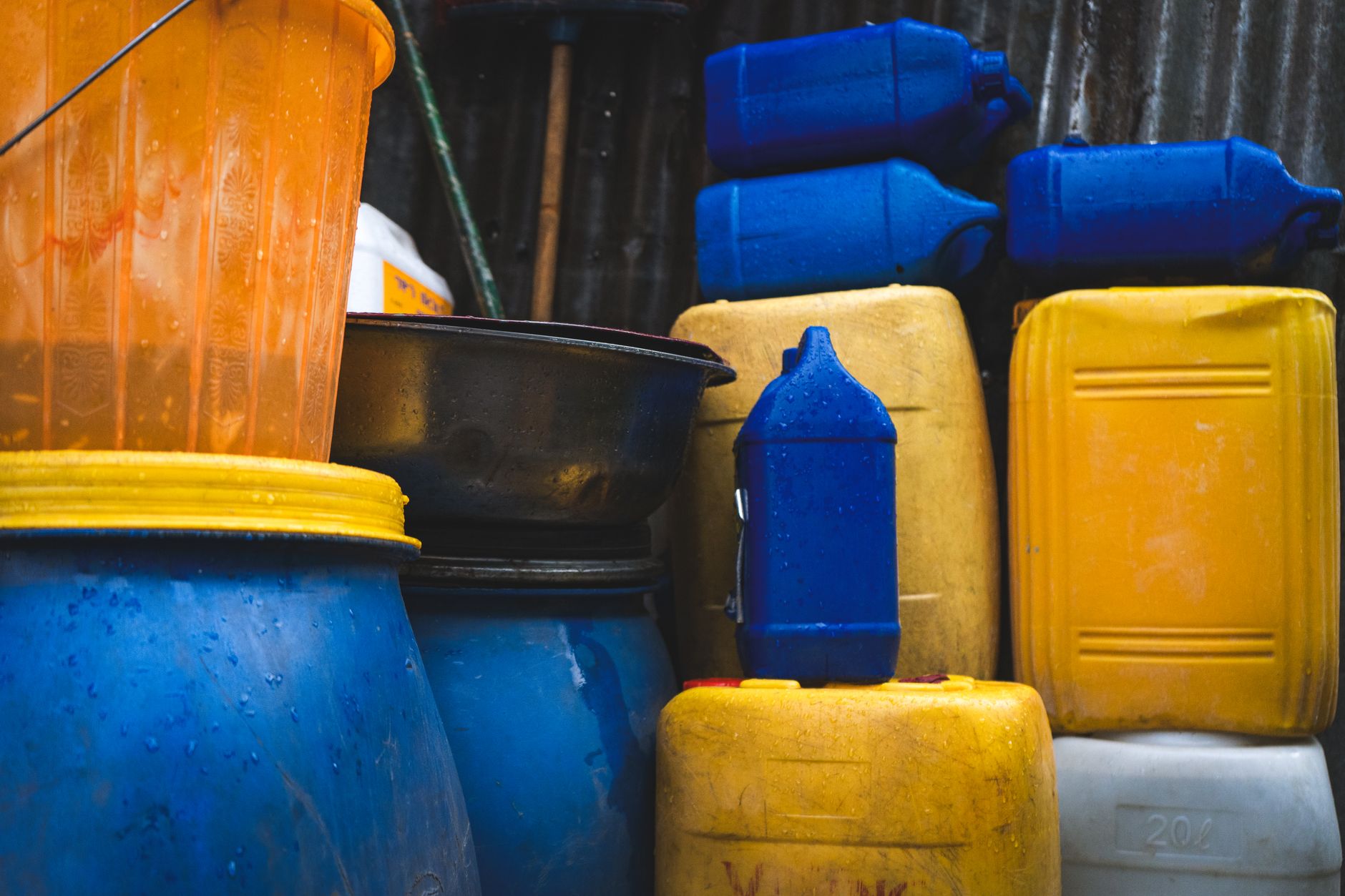
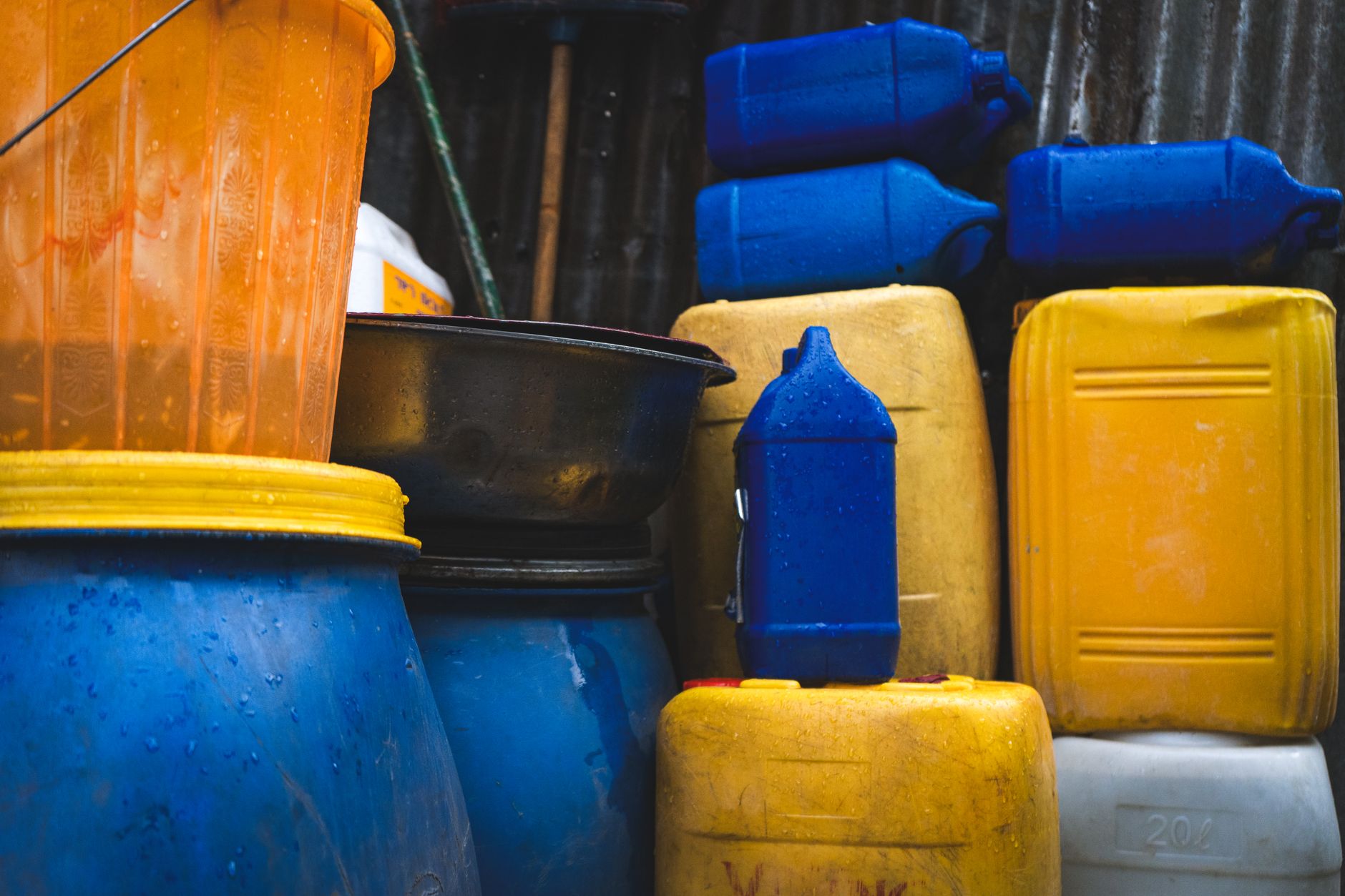
A 55-gallon food-grade polyethylene drum is the gold standard for bulk water storage. One drum supplies 55 gallons, enough for a family of four for nearly two weeks at the FEMA minimum. These drums are heavy when full, weighing over 450 pounds, so you need a garage floor or sturdy basement corner that can handle the load. Many preppers build racks to keep them off concrete, which can leach cold and cause condensation. The initial investment seems high, but the per-gallon cost drops lower than any other container over years of use.
Maintenance is straightforward but non-negotiable. Every 6, 12 months, drain, scrub, and refill the drum to prevent biofilm. Some users add a water purification treatment during refill to extend the safe window. A bung wrench and a siphon pump make dispensing practical; without them, you will struggle. For families building a 2-week food supply, a drum pairs perfectly with bulk dry goods.
One downside: portability doesn’t exist. During an evacuation, you are not taking this drum with you. That’s why we recommend pairing it with portable containers like a Water Brick or pouches. The drum stays home, guaranteeing you have water when you bug in. If you live in a hurricane-prone area, also consider a hurricane preparedness checklist to cover both shelter-in-place and evacuation scenarios.
Key strengths:
- ✅ Lowest cost per gallon over time
- ✅ Holds enough for extended shelter-in-place
- ✅ Durable HDPE food-grade material
- ✅ Can be connected to a pump or gravity-fed system
- ❌ Extremely heavy and immobile
- ❌ Requires dedicated floor space and a siphon pump
- ❌ Rotation every 6-12 months is mandatory
Who it’s for: Homeowners with a garage, basement, or dedicated storage space who want a set-it-and-forget-it bulk solution.
2. Water Brick Stackable Container (3.5 Gallon) , Best for Apartments & Modular Storage
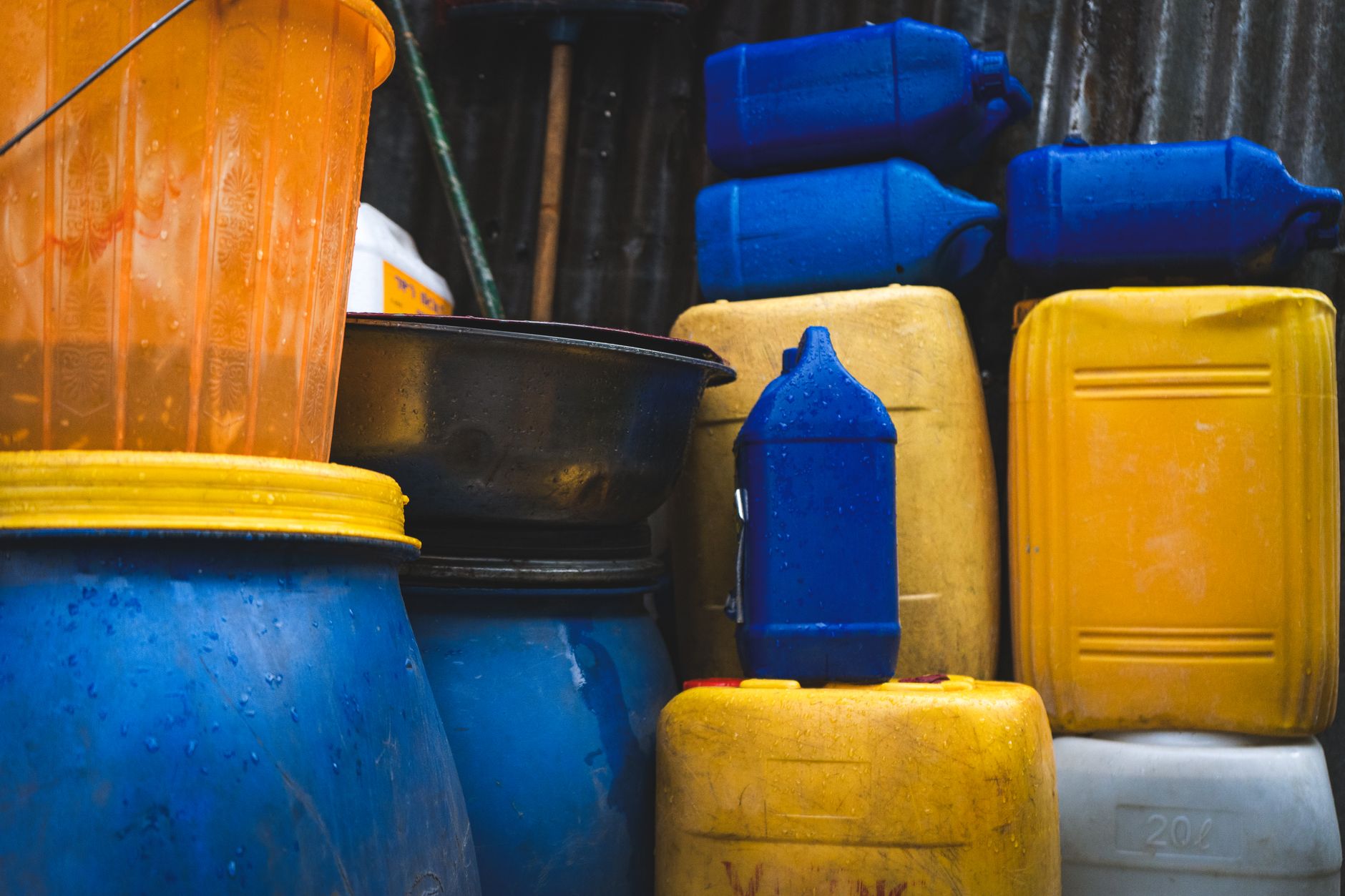
Water Bricks changed the game for small-space preppers. Each 3.5-gallon container is roughly the size of a shoebox, stacks securely with interlocking grooves, and can be carried by anyone. You can fit 10 bricks under a bed or in a narrow closet, giving you 35 gallons without monopolizing living space. They are made from heavy-duty, BPA-free HDPE that resists cracking even when stacked six high. The Red Cross emergency preparedness resources often highlight modular systems for their versatility.
When building a 72-hour emergency kit, a couple of Water Bricks slip easily into the car. Grab them and go. The small size also makes rotation less daunting: you are only dumping 3.5 gallons at a time, not 55. Most families rotate their bricks every 12 to 18 months, adding a few drops of bleach during refill. If space is extremely tight, combine these with a budget emergency preparedness approach and buy one brick per month.
The main drawback is price. At $15, $25 per brick, the per-gallon cost runs higher than a drum. Also, three dozen bricks scattered around the house can feel chaotic without a system. Label each with the fill date and a use-by reminder. Despite the cost, Water Bricks remain the top pick for urban apartment emergency preparedness because they conquer the space constraint that defeats most renters.
Key strengths:
- ✅ Stackable and modular, ideal for tight spaces
- ✅ Easy to carry and transport during evacuation
- ✅ Durable interlocking design prevents toppling
- ✅ Small volume simplifies rotation and inspection
- ❌ Higher cost per gallon than bulk drums
- ❌ Managing multiple bricks requires labeling discipline
- ❌ Not suitable as primary source for families who can’t lift heavy items
Who it’s for: Apartment dwellers, renters, and travelers who need portable, space-efficient storage that can double as a grab-and-go supply.
3. 7-Gallon Stackable Water Jugs , Best for Families Needing Transportable Bulk
The 7-gallon aqua-tainer is a classic. It sits between a massive drum and a tiny brick, giving you enough volume to matter while remaining car-trunk portable. These rectangular jugs stack two high safely and often come with a built-in spigot. FEMA’s ready.gov site explicitly names sturdy plastic containers as recommended storage vessels. At full capacity, one jug weighs about 58 pounds, so most adults can manage it. For a family of four, four jugs supply a four-day emergency ration.
The spigot turns daily use into a breeze. You can refill water bottles without a pump or siphon. This convenience makes rotation almost effortless; you’re more likely to use the water for plants or cleaning and refill it, ensuring freshness. The cost lands around $20, $30 per jug, delivering water at roughly $0.60 per gallon over a decade. When combined with a 3-month food supply, these jugs streamline meal prep.
Watch for two issues. First, the spigot seal on some brands weeps under prolonged pressure. Keep a spare O-ring and store jugs upright. Second, stacking more than two high risks cracking the bottom container. They lack the interlocking precision of Water Bricks. Still, for a family that wants a balance of volume and mobility, these jugs are hard to beat. Pair them with a best survival water filters kit for backup purification.
Key strengths:
- ✅ Portable yet high capacity (7 gallons each)
- ✅ Integrated spigot simplifies dispensing
- ✅ Affordable per-gallon cost over lifespan
- ✅ Easy to rotate and refill routinely
- ❌ Spigot seal may leak over time
- ❌ Only stackable two units high safely
- ❌ Empty jugs still take up significant floor space
Who it’s for: Families in single-family homes with medium storage space who need a balance of bulk and transportability.
4. Emergency Water Pouches (4.225 oz) , Best for Go-Bags & Short-Term Emergencies
When you need water you can forget about until you grab your bug-out bag, look no further than foil-sealed emergency water pouches. Each 4.225-ounce pouch holds just over half a cup, but a case of 100 pouches gives you about 3.3 gallons total, enough for one person for three days. The real magic is shelf life: most brands claim a 5-year expiration with zero maintenance. No rotation, no bleach, no testing. They meet the CDC’s emergency drinking water standards and are shelf-stable even in hot car trunks.
Pouches fit perfectly into best bug out bags 2026 and office kits because they are flat, lightweight, and crush-resistant. During a sudden evacuation order, you toss in a dozen pouches and go. NOAA’s weather safety guidance for hurricane zones often recommends pre-packaged water due to ease of distribution. For a 72-hour emergency kit list, pouches cover your immediate drinking needs without bulk.
The glaring downside is cost. At $0.40, $0.70 per pouch, that’s over $2 per gallon, making it the priciest per-unit option. Also, individual pouches are tiny; you’ll need a lot of them to meet a family’s needs. They generate more waste than reusable containers. Pouches are a supplement, not a primary storage strategy. Use them for grab-and-go scenarios, but build your long-term cache with a drum or jugs.
Key strengths:
- ✅ 5-year shelf life with zero maintenance
- ✅ Ultra-portable and crush-resistant
- ✅ Ideal for go-bags, car kits, and evacuation packs
- ✅ No need to treat or rotate water
- ❌ Highest cost per gallon of all options
- ❌ Tiny per-pouch volume; many required
- ❌ Single-use plastic generates waste
Who it’s for: Preppers focused on bug-out scenarios, office emergency kits, or anyone who wants hands-off water with a long shelf life.
5. Bathtub Water Bladder , Best for Hurricane & Short-Term Crisis
A bathtub bladder is a giant, food-grade plastic bag that lines your tub and holds up to 100 gallons of water in a few minutes. You fill it through a hose connected to the bathtub faucet, then seal it to keep out debris, pets, and insects. These are single-use marvels for specific warnings: a hurricane, blizzard, or announced water outage. The Red Cross lists tub bladders as a supplemental water source for short-term needs.
The cost is negligible. A quality bladder runs $20, $35, and you fill it with what is essentially free tap water. That’s $0.20 per gallon or less. Once the emergency passes, you drain it, dry it, and stow it away. There is no storage footprint when empty, which is its biggest advantage over permanent containers. For a grid-down survival guide, a bladder can be the last-minute solution you deploy when warnings are certain.
However, reliance is risky. You need notice. If a water main breaks without warning, you can’t fill it. Most bladders are one-time use or degrade after a couple of deployments. They won’t hold up to being crawled on by pets or kids. You also need to keep your tub meticulously clean before filling, or you will contaminate your supply. Use a bladder only as a backup to your stored water, not as your primary plan.
Key strengths:
- ✅ Extremely low cost per gallon
- ✅ Zero storage space when not in use
- ✅ Quick deployment under a warning (5, 10 minutes)
- ✅ Holds up to 100 gallons of protected water
- ❌ Useless if crisis strikes without notice
- ❌ Single-use reliability, can tear or leak
- ❌ Requires a clean and dedicated bathtub to fill
Who it’s for: Homeowners in hurricane or storm-prone areas who want a last-minute, high-volume safety net when evacuation isn’t possible.
Frequently Asked Questions
How much water does FEMA recommend storing?
FEMA advises a minimum of one gallon per person per day for at least three days. For a two-week supply, store 14 gallons per person. Don’t forget extra for pets, cooking, and hygiene.
Can I store water in old milk jugs?
No. Milk jugs degrade quickly and leach chemicals. Use only food-grade HDPE containers labeled with a recycling #2 on the bottom. Glass jars break easily and are not recommended for large volumes.
How long can I store water before it needs rotating?
Commercially sealed water has a 5-year shelf life. Tap water stored in sanitized, sealed containers should be rotated every 6 to 12 months. Treat stored water with purification drops to extend potability.
Do I need to treat municipal tap water before storing?
If your public water system is chlorinated, you can store it directly. However, adding 8 drops of unscented household bleach per gallon or using water preservers adds an extra safety margin against bacterial regrowth.
What is the best container for an apartment?
Stackable options like Water Bricks or 7-gallon jugs maximize vertical space. They fit in closets, under beds, or in pantry corners. Avoid large drums if floor space is tight.
Can I use a bathtub bladder more than once?
Most bladders are single-use. They are designed to hold water only until the emergency passes. After use, dry them thoroughly and store as a backup, but they may not be as reliable a second time.
What Should You Remember?
- FEMA recommends at least 1 gallon per person per day; store for 2 weeks if possible.
- 55-gallon drums offer the lowest cost per gallon for families with dedicated storage space.
- Water Bricks are stackable, portable, and ideal for rotating water in tight spaces.
- Emergency pouches last 5 years and require no treatment, perfect for bug-out bags.
- Bathtub bladders can capture up to 100 gallons quickly during hurricane warnings.
- Treat all stored water annually with unscented bleach or purification drops to prevent contamination.
- Rotate your supply religiously; old water tastes flat and can harbor pathogens.
This article is for general information only. Emergency preparedness involves real safety risk — always consult official sources (local authorities, CDC, FEMA) and verify gear before relying on it.